
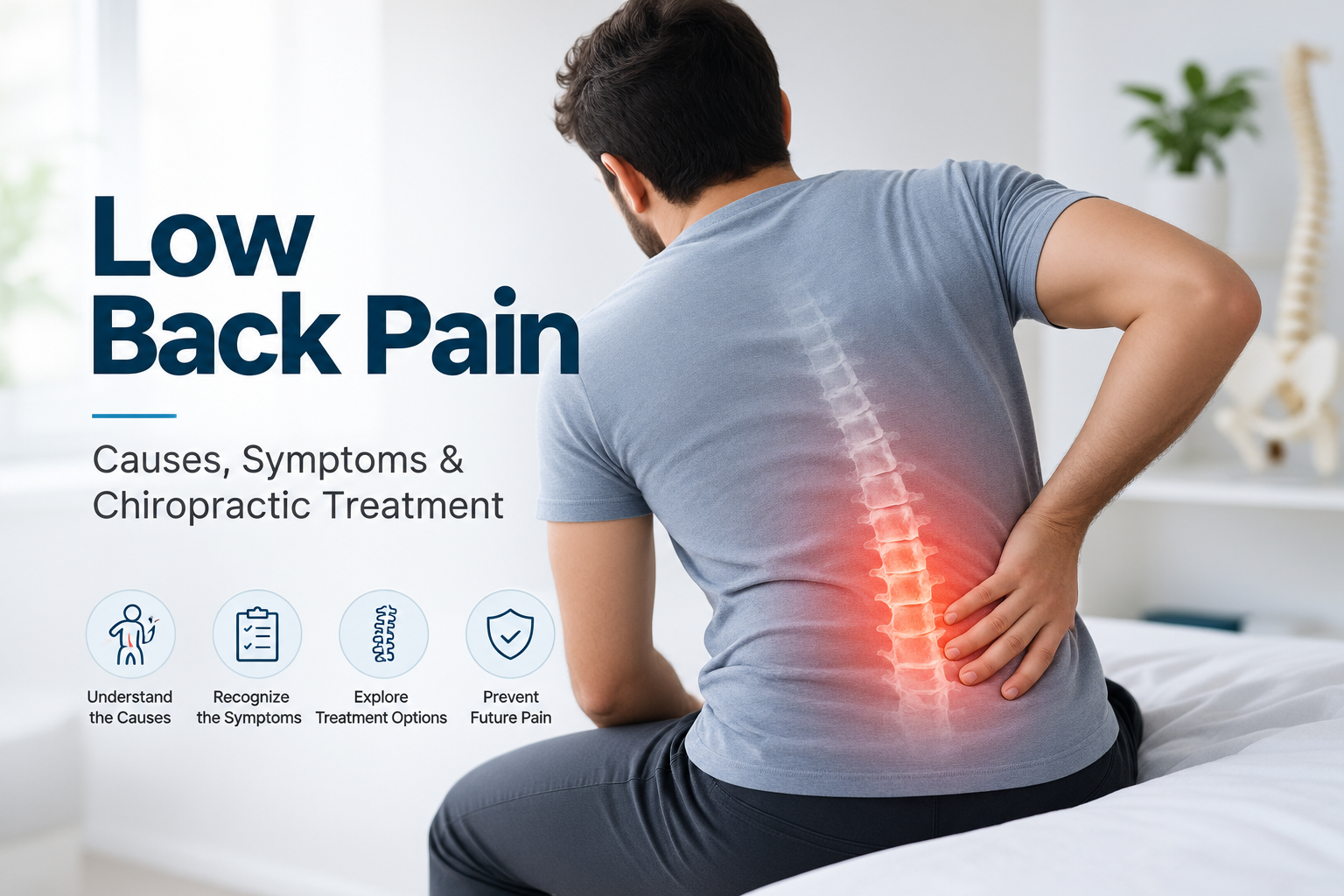
Low Back Pain: Causes, Symptoms & Chiropractic Treatment
Low Back Pain: Causes, Symptoms & Chiropractic Treatment
If you’ve ever struggled to get out of bed because of low back pain, you’re not alone. Low back pain is one of the most common musculoskeletal conditions worldwide and affects people of all ages—from office workers and athletes to parents and retirees.
For some people, the pain develops suddenly after lifting something heavy. For others, it builds gradually after months or years of poor posture, prolonged sitting, repetitive movements, or spinal degeneration. Regardless of how it starts, back pain can interfere with work, exercise, sleep, and the activities you enjoy most.
The good news is that many cases of back pain can be effectively managed without surgery. When the underlying cause is accurately identified, conservative treatments—including chiropractic care, targeted rehabilitation exercises, posture correction, and lifestyle modifications—can help reduce pain, restore movement, and improve your quality of life.
In this guide, you’ll learn:
- The most common causes of this condition
- Symptoms that should never be ignored
- When to seek professional care
- How chiropractors evaluate back pain
- Evidence-based treatment options
- Practical strategies to help prevent future episodes
Whether you’re experiencing mild discomfort or persistent pain that radiates into your legs, understanding the cause is the first step toward lasting relief.
Medically reviewed by Dr. Shahed Sadr, D.C. | Updated August 2026
What Is Low Back Pain?
Lower back pain refers to pain, stiffness, or discomfort in the lumbar region—the lower portion of your spine located between your rib cage and pelvis.
Pain may develop suddenly after an injury or appear gradually over time due to wear and tear, repetitive strain, or lifestyle factors. It can range from a dull ache to sharp, stabbing pain and may occasionally spread into the hips, buttocks, or legs.
Healthcare providers generally classify lower back pain into three categories:
Acute Lower Back Pain
Lasts less than six weeks and is often caused by muscle strains, ligament injuries, or minor mechanical problems.
Subacute Low Back Pain
Persists for six to twelve weeks and may require a more comprehensive evaluation if symptoms do not improve.
Chronic Low Back Pain
Continues for more than three months and often involves multiple contributing factors, including spinal degeneration, joint dysfunction, disc problems, or persistent muscle imbalance.
Understanding which type of back pain you’re experiencing helps determine the most appropriate treatment plan.
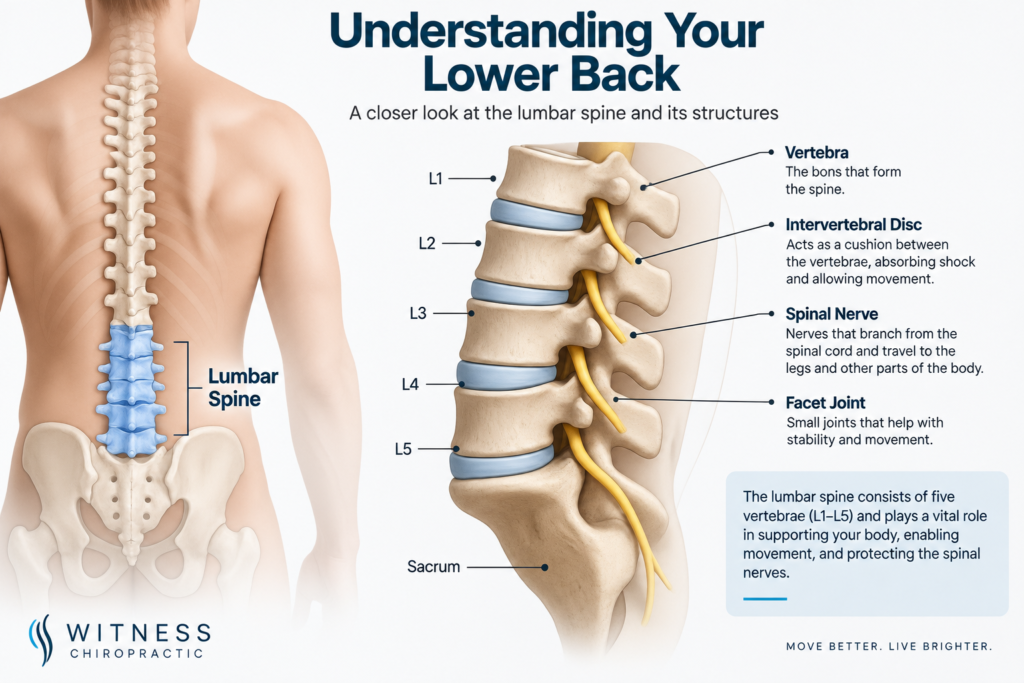
Understanding Your Lower Back
The lower back is a remarkably strong and complex structure designed to support your body’s weight while allowing flexibility and movement.
Your lumbar spine consists of five vertebrae (L1–L5), separated by intervertebral discs that function as natural shock absorbers. These discs help cushion the spine during everyday activities such as walking, bending, lifting, and running.
Supporting structures include:
- Muscles that stabilize and move the spine
- Ligaments that connect bones together
- Facet joints that guide spinal motion
- Spinal nerves that transmit signals between the brain and the rest of the body
When any of these structures become irritated, injured, inflamed, or compressed, pain can develop.
Because several different tissues can produce similar symptoms. A thorough evaluation is important to identify likely contributing factors, rule out serious conditions, and determine the safest treatment approach.
Common Causes of Low Back Pain
Low back pain is not a diagnosis—it’s a symptom. Many different conditions can contribute to pain, and successful treatment depends on identifying the underlying cause.
Below are some of the most common reasons people experience lower back pain.
Mechanical Lower Back Pain
Mechanical back pain accounts for the majority of lower back pain cases.
It occurs when muscles, joints, ligaments, or spinal structures become overloaded through repetitive stress, improper lifting, prolonged sitting, poor posture, or sudden movements.
Common mechanical conditions include:
- Muscle strains
- Ligament sprains
- Facet joint dysfunction
- Joint irritation
- Minor spinal instability
Many patients notice increased pain after prolonged sitting or first thing in the morning, with symptoms improving as they begin moving throughout the day.
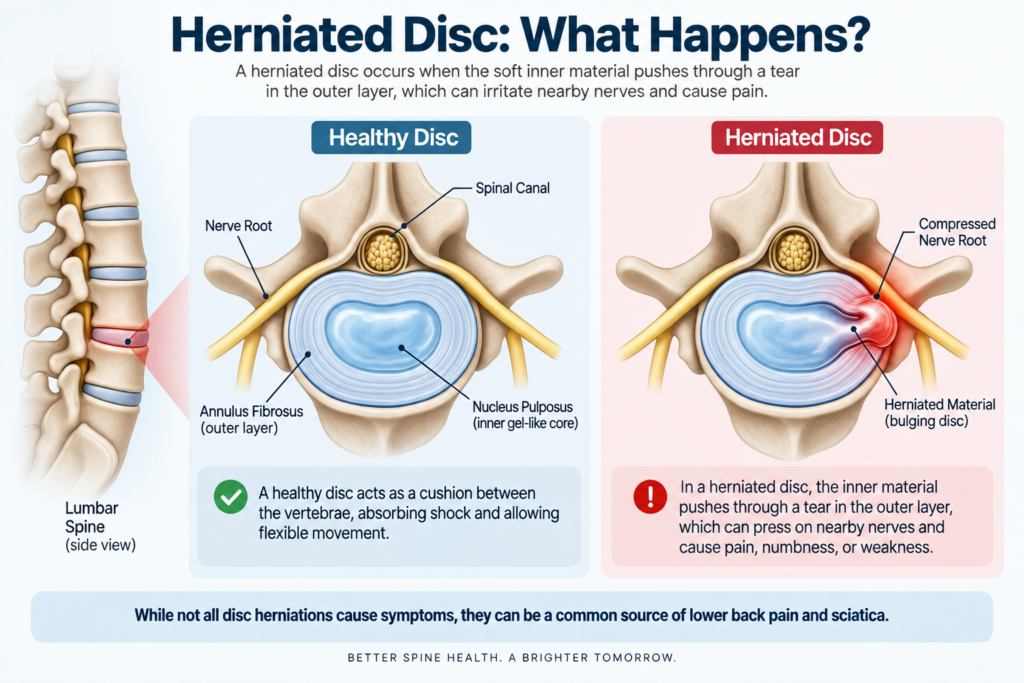
Herniated or Bulging Discs
Between each vertebra sits a spinal disc that absorbs shock and allows flexibility.
Over time—or following injury—the outer layer of a disc may weaken, allowing the inner material to bulge or protrude outward.
If the disc places pressure on nearby spinal nerves, symptoms may include:
- Lower back pain
- Pain radiating into one leg
- Numbness
- Tingling
- Muscle weakness
Although many people assume every back pain problem is caused by a “slipped disc,” disc injuries represent only one of many possible causes.
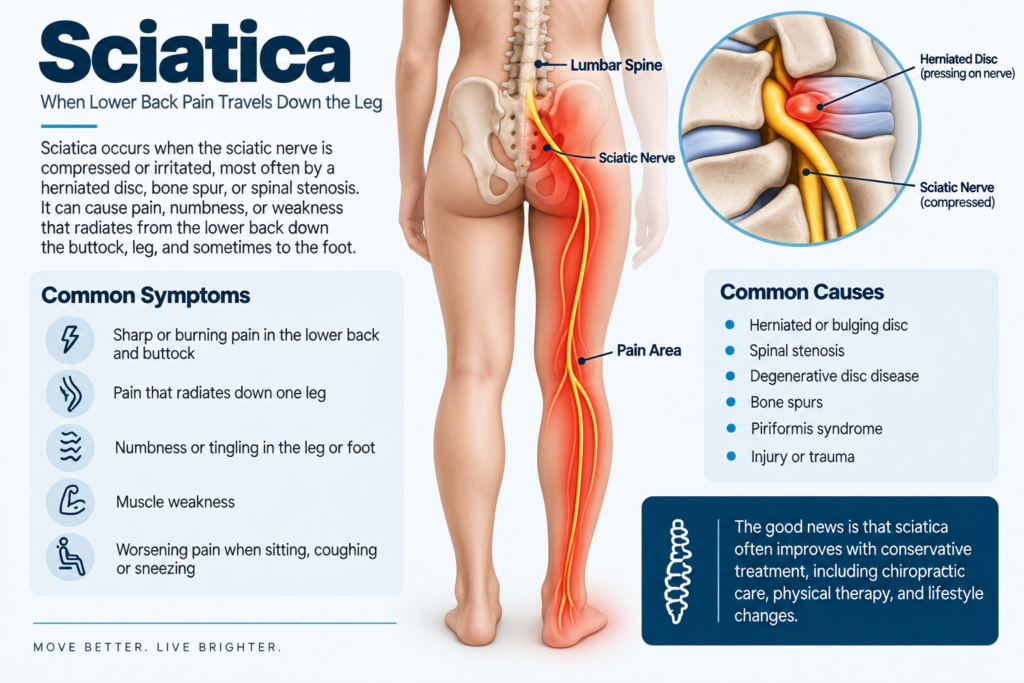
Sciatica
Sciatica refers to pain, tingling, numbness, or weakness caused by irritation or compression of one or more nerve roots in the lower spine. Symptoms may travel from the lower back or buttock into the thigh, calf, or foot.
Sciatica develops when irritation or compression affects the sciatic nerve—the body’s largest nerve.
Rather than remaining confined to the lower back, pain often travels through the buttock and down the back of the thigh, sometimes extending into the calf or foot.
People commonly describe sciatica as:
- Burning pain
- Electric shock sensations
- Tingling
- Pins and needles
- Leg numbness
Sciatica is a symptom rather than a condition itself, making proper diagnosis essential.
Degenerative Changes
As we age, normal wear and tear affects the joints, discs, and ligaments of the spine.
Some individuals develop:
- Osteoarthritis
- Degenerative disc disease
- Facet joint arthritis
- Spinal stiffness
While age-related changes are common, they do not always cause pain. Imaging findings should always be interpreted alongside a thorough physical examination.
Poor Posture and Sedentary Lifestyle
Modern lifestyles place tremendous stress on the lower back.
Hours spent sitting at a desk, working on a laptop, driving, or looking down at a phone can gradually overload spinal tissues.
Poor posture often contributes to:
- Muscle imbalance
- Joint stiffness
- Reduced mobility
- Increased spinal stress
- Chronic lower back discomfort
Fortunately, these issues often respond well to posture correction, movement, strengthening exercises, and ergonomic improvements.
Common Signs and Symptoms of Low Back Pain
Low back pain affects everyone differently. While some people experience mild stiffness, others develop severe pain that limits daily activities.
Common symptoms include:
- Persistent aching in the lower back
- Sharp pain during movement
- Morning stiffness
- Muscle spasms
- Pain after prolonged sitting
- Difficulty standing upright
- Pain when bending or lifting
- Pain radiating into the buttocks or legs
- Tingling or numbness
- Reduced flexibility
- Difficulty walking long distances
The location, intensity, and pattern of your symptoms provide valuable clues about the underlying cause of your condition.
Treatment for lower back pain depends heavily on the cause. A practical approach usually progresses from conservative care to more invasive options only when necessary.
Chiropractic Treatment for Low Back Pain
Keep moving
avoid prolonged bed rest; walking and normal activity as tolerated usually help.
Exercise/rehab
core and hip strengthening, mobility work, graded loading, and correcting movement limitations.
Manual therapy
spinal manipulation/mobilization and soft-tissue techniques can provide short-term relief for some patients, especially when combined with exercise.
Heat or ice
often useful for temporary symptom relief.
Medication
short-term anti-inflammatory medication may help some people when medically appropriate.
Decompression/traction
may help selected patients, particularly when symptoms involve certain disc or nerve-root presentations, but it isn’t appropriate for every type of low-back pain.
Injections or surgery
generally reserved for specific diagnoses or persistent/severe symptoms that haven’t responded to conservative treatment.
The important part is first determining whether the pain is primarily muscular/mechanical, joint-related, discogenic, radicular/sciatica, stenotic, or coming from something outside the spine. Treatment should then be matched to the findings rather than treating every case of low-back pain the same way.
Urgent medical evaluation is warranted for new bowel/bladder dysfunction, saddle numbness, rapidly progressive leg weakness, major trauma, fever with back pain, or other concerning systemic symptoms
If your lower back pain is accompanied by any of the following symptoms, seek immediate medical attention rather than waiting for a routine chiropractic appointment:
New loss of bowel or bladder control
Numbness or loss of sensation around the groin, genitals, buttocks, or inner thighs
Severe or rapidly worsening weakness in one or both legs
Fever or chills associated with significant back pain, or unexplained weight loss
Back pain following significant trauma, such as a fall or car accident
Back pain with a history of cancer, serious infection, or significant immune suppression
Severe abdominal or chest pain, an unusual pulsating sensation in the abdomen, or shortness of breath
These symptoms may indicate a condition that requires urgent medical evaluation before conservative treatment is considered.
Don’t Ignore Persistent Back Pain
Occasional muscle soreness is common, but pain that lasts more than a few days, keeps returning, or interferes with your daily activities deserves professional evaluation.
Timely evaluation may help identify contributing factors, rule out conditions requiring medical referral, and provide strategies that reduce pain and the likelihood of recurring episodes.
If you’re experiencing ongoing lower back pain, scheduling a comprehensive chiropractic assessment can help identify the source of your symptoms and determine the most appropriate treatment plan before the condition worsens.
Frequently Asked Questions
What is the most common cause of low back pain?
Common causes of low back pain include muscle or ligament strain, prolonged sitting, poor posture, repetitive movements, disc problems, and age-related changes. The underlying cause can vary from person to person, so a proper evaluation is important.
Can a chiropractor help with low back pain?
Chiropractic care may help some people with low back pain, particularly when combined with exercise and other conservative treatments. A chiropractor can evaluate your symptoms and determine whether chiropractic treatment is appropriate for your condition.
Can chiropractic care help sciatica
Chiropractic care may help some people with sciatica by addressing spinal and musculoskeletal factors that may contribute to nerve irritation. Treatment is based on the underlying cause and may include manual therapy, exercise, and other conservative approaches.
Can a herniated disc cause low back pain?
Yes. A herniated or bulging disc can cause low back pain when the disc irritates nearby tissues or compresses a spinal nerve. Symptoms may also include pain that travels into the leg, numbness, tingling, or weakness.
When is low back pain considered serious?
Low back pain may require urgent medical evaluation if it is accompanied by bowel or bladder problems, numbness around the groin or saddle area, progressive leg weakness, major trauma, fever, unexplained weight loss, or severe abdominal or chest pain. These symptoms can indicate a more serious underlying condition.
Should I rest or stay active with low back pain?
In most cases, staying gently active is better than prolonged bed rest. Light movement and appropriate exercises may help maintain mobility and support recovery. However, activities that significantly increase your pain should be avoided until you have been properly evaluated.
Ready to Take the Next Step?
If low back pain is affecting your daily activities, getting a professional evaluation can help identify the underlying cause and determine the right treatment approach. Contact Witness Chiropractic to schedule an appointment and discuss your symptoms with Dr. Shahed Sadr, D.C.